
ILAB Joins the Protest Against Amazon’s Bid to Control Top-Level Domain Names
Today, the International League of Antiquarian Booksellers has joined the numerous other organizations, such as the Authors Guild or the American Association of Publishers, objecting to the Internet Corporation for Assigned Names and Numbers (ICANN’s) plan to sell top-level domains to private companies. Online retail giant Amazon has bid to be the exclusive custodian of .book, .author and .read domains. Read more ...
Paris 2014 - 41st ILAB Congress
The ILAB and SLAM committees are very pleased to announce that the 41st ILAB Congress will run in Paris from the 13th to 16th April, 2014, to coincide with the 100th anniversary of SLAM. The Paris Congress will immediately follow the International Antiquarian Book Fair at the Grand Palais scheduled from 10th to 13th of April 2014. We hope that the very special program that we have planned will attract numerous visitors to Paris and we are looking forward to meeting our new colleagues and welcoming old friends.
Anne Lamort, President SLAM, Tom Congalton, President ILAB
16th ILAB Breslauer Prize for Bibliography
The 16th ILAB Breslauer Prize for Bibliography will be awarded in 2014 to one or more books about books published in any language and in any part of the world between 2009 and 2012. Publishers, librarians, collectors, antiquarian booksellers and all book lovers are very welcome to submit books to the prize until the end of April 2013 by sending a single copy to the Prize Secretary.
Support scholarship! Submit books to the most prestigious prize until April 2013!
The World’s Expert Antiquarian Booksellers - In 1 Book!
The new edition of the ILAB Directory contains all names, addresses and specialities of the ILAB dealers who are organized in 22 national associations and who are located in 32 countries all over the world. Have a look!
“Book collecting is and almost always has been a vibrant, exciting and engaging pastime"
"It’s our job to make others understand that.” An interview with ILAB President Tom Congalton about his career, his favourite books, Between the Covers, collecting, ILAB and the future of the trade. Read it!
ILAB Booksellers on Video
"A wonderful snapshot of the rich history of both the ABAA and the rare book trade" - ILAB is proud to present the video archive project by Michael Ginsberg and Taylor Bowie. Recently added: interviews with two amazing ladies: Marguerite Goldschmidt and Florence Shay.
"Out of the classroom and into the world" - ILAB Internships
ILAB has launched an internship program for young antiquarian book dealers. Alena Lavrenova, Anastasya Zhikhareva, and other young antiquarian booksellers from Russia, spent several weeks in Austria, Hungary, Germany, Netherlands, Australia and the United States. Read their exciting reports and join our new Facebook Group!
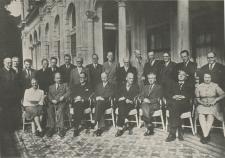
The World's Best Booksellers Met in Switzerland
From 22 to 26 September the presidents of 22 national antiquarian booksellers' associations and rare book dealers from all over the world met for their 40th Congress in Lucerne. Besides the meetings and elections on Saturday, Sunday and Tuesday, they climbed high mountains and dark caves and visited Switzerland's most outstanding museums and private collections. Read the online diary!
Old and Rare Books. From ILAB: the one stop FREE App for all lovers of rare books
The International League of Antiquarian Booksellers (ILAB) has launched an ILAB Moile App which is now available in the Apple Store and the Android Market. Search for “ILAB rare books” or “International League of Antiquarian Booksellers” to find the free App ready to install on your phone.
|
Book FairsRare Books - Next Fairs
-
08 Jun 2013 - 09 Jun 2013
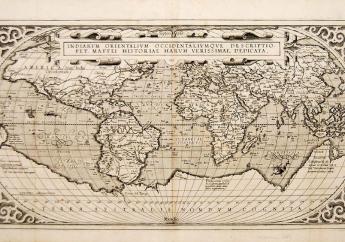
The largest Antique Map Fair in Europe, established 1980, brings together around 40 of the leading national and international antiquarian map dealers as well as hundreds of visiting dealers,... [+] More
-
09 Jun 2013
Dealers from the UK and abroad offer fine bindings, antiquarian, illustrated books, travel, modern firsts, children’s books, maps, prints, and ephemera. [+] More
EventsRare Books - Next Events
-
04 Nov 2013 - 08 Nov 2013
California Rare Book School is a continuing education program dedicated to providing the knowledge and skills required by professionals working in all aspects of the rare book community, and for... [+] More
BooksellersAntiquarian Booksellers
Rare Book Gallery
-
The Great Gatsby.
Fitzgerald, F. Scott.
Bookseller: Raptis Rare Books
New York: Charles Scribners. 1925.. First edition, first printing with "chatter" on p. 60, line 16, "northern" on p. 119, line 22, "it's" on p.... More
New York: Charles Scribners. 1925.. First edition, first printing with "chatter" on p. 60, line 16, "northern" on p. 119, line 22, "it's" on p. 165, line 16, "away" on p. 165, line 29, "sick in tired" on p. 205, lines 9-10, and "Union Street station" on p. 211, lines 7-8. Octavo, original dark green cloth. A very fine copy in a very good first issue dust jacket, with lowercase "j" in "jay Gatsby" on the back panel, hand-corrected in ink. The dust jacket has had some restoration to the folds, tape removed and some tears repaired that include expert recoloring to portions to the upper and lower spine. An excellent copy, extremely rare in the original dust jacket. The dust jacket is not only one of the most recognizable and iconic book covers of the twentieth century, but it is also one of the most rare. The cover art was entitled "Celestial Eyes" and was designed by artist Francis Cugat, who was not well-known at the time. Fitzgerald, however, fell in love with the design and actually wrote a number of things into the novel to relate it to the proposed cover. Housed in a custom quarter morocco box.. Less
Price: 165000.00 USD
-
The Elwood Evans Abolition Autograph Collection, featuring a Rare Autograph...
CINQUE
Bookseller: Between The Covers
Note: The information below, as well as additional photos, can also be viewed at http://www.betweenthecovers.com/private/Cinque/Excerpt.pdf.The... More
Note: The information below, as well as additional photos, can also be viewed at http://www.betweenthecovers.com/private/Cinque/Excerpt.pdf.The Abolitionist Autograph Collection of Elwood Evans (1828-1898), assembled in the 1840s, highlighted by what we believe to be one of only three surviving autographs of Cinque, leader of the Amistad revolt, and the only example in private hands. The collection, assembled in Evans' youth, also contains a fine example of the rare John Sartain engraving of Cinque, the Signature of another member of the Amistad revolt, Fuli (here Foole), as well as the Signatures of abolitionists Thomas Clarkson, Charles C. Burleigh, John Pierpont, Joseph Parrish, Joshua Giddings, and Isaac T. Hopper, considered the founder of the Underground Railroad.Elwood Evans, who was born and raised in Philadelphia, traveled to the Pacific Coast at the age of 22 and became deputy clerk to the collector of Puget Sound. The collection also contains four State appointments, dating between 1851 and 1854, in each case appointing him Commissioner for the Territory of Oregon. These are Signed by William F. Johnston, George F. Fort, Horatio Seymour, and Emory Washburn (Governors of Pennsylvania, New Jersey, New York, and Massachusetts, respectively). Evans spent most of his adult life in the Pacific Northwest, as a private attorney, public official (he was Mayor of Olympia from 1859-1861), and local historian, culminating in the publication of his two-volume History of the Pacific Northwest (1889).THE CINQUE AND FOOLE AUTOGRAPHSThe Signatures of Cinque and Foole are in ink, on a small slip of paper (approximately 4" x 3.5"), mounted on a larger contemporary sheet of paper. Below the signature is written in ink in a different hand: "at Lombard St School 5mo 27 1841." Below this in pencil is written "Cinque and F-foole [sic] visited the abo[ve] School with Chas Evans then a Director and then and there signed the above." Cinque (also known as Cingue, Joseph Cinquez, and Sengbe Pieh), was born in what is now Sierra Leone around 1813 and is believed to have died there circa 1879. The history of Cinque's life from the time of his enslavement in 1839 to his return to Sierra Leone as a free man in 1841 is well-known, having been re-told numerous times and dramatized in the 1997 film Amistad, in which he was portrayed by actor Djimon Hounsou. Throughout the ordeal of the Amistad captives, Cinque was the unquestioned leader of the group, apparently not only because of his own initiative (having picked the lock of his captors while aboard ship, released his fellow slaves, and planned their rebellion), but also through his commanding presence and abilities. The entire group of Amistad captives was taught English, although not surprisingly it was the children among them who became most conversant in the language. After the Supreme Court ruled in their favor on March 9, 1841, they traveled to New York and Philadelphia as part of the effort to raise funds to provide for their transport home. On these occasions Cinque gave speeches in Mende, while a youth named Kale would speak in English. Despite the language difference, contemporary reports relate that Cinque's charisma was such that his speeches were often enthusiastically received even before they were translated to his audience.It is difficult to determine how proficient in English Cinque became while in the United States. Records indicate that he always spoke in Mende when giving court deposition and when making public appearances. However, the two other extant original documents signed by him, both institutionally held, may contain additional samples of his writing. The famous Mendi Bible, which the Amistad captives presented to John Quincy Adams in 1841 in appreciation of his forceful and effective arguments on their behalf, and now held at the Adams National Historical Park, contains a letter to Adams that is signed, "For the Mendi people. Cinque, Kinna, Kale." Some scholars believe the letter, and not just the signature, to be in Cinque's hand. The other signed letter is that held by the Amistad Research Center at Tulane University, dated February 9, 1841, from Cinque to the prominent New York merchant and abolitionist Lewis Tappan, who was the leader of the Amistad Committee and the person most responsible for their legal defense and living conditions while they were in the United States. This letter too is believed by some scholars to be entirely in Cinque's hand. Aside from his three years in the United States, very little is known about Cinque, and there is no reason to believe that he had occasion to write his name after his return to Africa.In addition to the three known autographs (the two institutionally held and the one offered here), there are two known facsimiles of his autograph as well. The first is the contemporary facsimile executed by engraver John Sartain for his 1840 mezzotint of Cinque (included in this collection, see below for further details). It is likely Sartain employed a certain amount of artistic license in more neatly rendering Cinque's signature. The second facsimile is found in a 1906 book Farmington, Connecticut: The Village of Beautiful Homes, in which local historian Julius Gay allowed his own "Autographs of the `Mendi Negroes,"" obtained in his youth when the Amistad captives were housed in Farmington, to be reprinted (p.177). The whereabouts of the original documents from which these facsimiles were made are unknown, and it is likely that one or both have long perished.The Amistad case and the Amistad captives became a national sensation, and their time in Philadelphia (May 24 to May 28, 1841) is well documented in contemporary issues of the Pennsylvania Freemen. The June 16, 1841 issue reports that they visited four churches, at which $482.30 was raised for their return to Africa. While not as fiscally impressive, the paper also reports that $2.01 was collected by the "pupils of the colored Public School." At the time Philadelphia had two public schools for African-American children (sometimes referred to as four schools because boys and girls were educated separately), one at Charlotte and Brown Streets, the other at Sixth and Lombard Streets. The Lombard Street School was built in 1819 as a school for white pupils. In 1828, when white students were transferred to a new building on Locust Street, it became a public school for African-American children. The school was later called the James Forten School, after the prominent African-American businessman who fought successfully to keep the school open when the school board wished to close it the year before the Amistad captives visited.While a certain amount of contemporary attention was paid to Cinque as the leader of the Amistad rebellion, comparatively little primary material exists about the other captives individually. Foole, also known as Fuli, Fu-Li-Wa, and Fuleh, like Cinque gave deposition against their Spanish captors. In addition, it was technically he who brought suit against them (done to forestall their removal to Spanish territory in case the Amistad case itself was lost). Foole, with Cinque and thirty-three other survivors of their ordeal, departed for their return to Africa in November 24, 1841. A facsimile of Foole's signature exists on the Julius Gay reprint, and the Amistad Research Center holds three letters signed by Foole; we could locate no other surviving documents signed by Foole.THE SARTAIN ENGRAVINGIncluded with the autograph collection is a handsome example of John Sartain's engraved mezzotint print of "Cinque: The Chief of the Amistad Captives" (approximately 9.25" x 7.5", very lightly rubbed in one spot else fine, mounted on a stiff backing sheet). This well-known image, commissioned by the African-American abolitionist Robert Purvis, is after a painted portrait by the abolitionist Nathaniel Jocelyn (brother of Amistad Committee member the Reverend Simeon S. Jocelyn). In March, 1841, Sartain, possibly at his own expense, sent 200 copies of the mezzotint to Lewis Tappan to be sold to help raise funds for the Amistad captives. Despite the strong pro-abolition mood of much of Philadelphia in the 1840s, the image was not universally acclaimed there. The city also had strong currents of anti-abolition sentiment from both white workers who felt threatened by the large free black workforce, and from elements of the city's elite who had strong financial ties to the South. Thus the Sartain portrait was officially rejected by the Philadelphia Academy for their second annual Artists" Fund Society exhibition because, "under the excitement of the times, it might prove injurious both to the proprietors and the institution" (Martinez, Life and Career of John Sartain, p. 76). This Cinque portrait is the most famous image by John Sartain (1808-1897), the London-born artist and publisher who settled in Philadelphia. Sartain was a committed abolitionist who also engraved portraits of William Lloyd Garrison, William H. Furness, and Lucretia Mott. He also published several notable works by his friend Edgar Allan Poe including "The Bells" and "Annabel Lee." Although we could find no direct connection between Sartain and Evans, an 1843 letter from Poe to the 14 year-old Elwood Evans, sending "Mr. Dana's" Boston address, was in the Doheny collection and sold at Christie's in 1988. In addition to writing Two Years Before the Mast, Richard Henry Dana was also an active abolitionist.While the Jocelyn/Sartain image has been reprinted countless times (mostly from the damaged example of the mezzotint in the National Portrait Gallery), original examples of the Sartain mezzotint are genuinely rare.THE CLARKSON, HOPPER, BURLEIGH, PIERPONT, PARRISH and GIDDINGS AUTOGRAPHSThe Thomas Clarkson autograph is also on a small (approximately 4.25" x 2.25") slip of paper, a little soiled else fine, and mounted to a contemporary sheet. It reads in full: "Thomas Clarkson / Playford Hall - Sept. 1, 1846, aged 87 / 'Remember them that are in bonds as bound with them' Hebrews 12.3." On a separate sheet Evans has written out a biography of Clarkson and ends with, "The above Autograph was purchased at the `Liberty Bazaar" held in this city [i.e. Philadelphia] in January 1847 and is known to be original." Clarkson (1760-1846), one of England's most famous abolitionists, first became interested in the subject on purely academic grounds when, as a student at Cambridge, he entered a Latin essay contest on the subject of the morality of slavery. Shortly after winning the contest, for which he undertook considerable research, Clarkson experienced a spiritual epiphany and decided to devote his life to abolition. With Granville Sharp he formed the Society for the Abolition of the Slave Trade, and later persuaded William Wilberforce to join their cause. The group was directly responsible for the abolition of the slave trade in the British Empire in 1807, and the abolition of slavery itself throughout most of the British Empire in 1833. Clarkson's publications include A Summary View of the Slave Trade and of the Probable Consequences of Its Abolition (1787) and History of the Abolition of the African Slave Trade (1808). While Clarkson autographs are not rare, this is certainly one of the last he ever provided, and comes with a quaint provenance.Isaac Tatem Hopper (1771-1852) was a New Jersey-born Quaker bookseller who, with Lydia Maria Child, edited the National Anti-Slavery Standard. More importantly, as a teenager he began to organize the system for aiding fugitive slaves that is now known as the Underground Railroad, and some consider him the founder or father of the Railroad. Hopper remained active in both the Railroad and abolition throughout his life, as well as other causes including prison reform. Hopper's note is on a single quarto leaf, folded from mailing with a few very minor chips and tears along the left side (probably from having been tipped into a larger book) and a moderate dampstain along the right side, very good. It reads: "My dear young friend, In compliance with thy request I cheerfully furnish thee with my autograph accompanied with an `original sentiment. / 'He who conscientiously discharges all his social and relative duties, without regard to circumstances or the opinions of others, may some times incur the displeasure of his friends; yet he will find in the end a comfort and confidence that will very far surpass all the favor and applause that can be awarded by his fellow man - Thy affectionate friend / Isaac T. Hopper / New York 9 mo 13th 1842 / To Elwood Evans."Charles Calistus Burleigh (1810-1878), a noted editor of abolitionist publications and widely considered among the best orators for the anti-slavery cause, sent Evans a short note: "To hold a slave without transgressing the Christian law, `love the Lord they God with all they heart, & love they neighbor as thyself," is just as impossible as to do injustice under the influence of a supreme regard for right, to act selfishly from pure good will to all mankind, & to support the falsehood from an unbounded reverence for truth. Philad. 10/25/42. C.C. Burleigh." On the reverse he has noted, "For Elwood Evans. Care of Edwin Satter." Burleigh's note is also on a single quarto leaf, near fine, folded from mailing and with a little wear along the left side from where it was likely tipped into a larger book.The letter from John Pierpont (1785-1866), dated 30 Nov. 1847, folded from mailing else about fine, notes that Pierpont does not have an extra autograph from Dr. [William E.] Channing to provide to Evans for his collection. However, Pierpont was flattered by the "kind things that you are pleased to say of myself and my past cause[s] and wishing you may succeed in your autographic enterprise..." Pierpont was a Connecticut-born educator, poet, and Congregationalist minister. While pastor at Boston's Hollis Street Church he published two of the better-known early school readers in the United States. His social activism for temperance and abolition angered his parishioners and after more than two decades he left that congregation and became pastor of a Unitarian church in Troy, New York, where this letter was written. Pierpont's Anti-Slavery Poems was published in 1843, and his poems were often recited at public anti-slavery meetings. Curiously, while the aged Pierpont was a Union military chaplain and then worked in the Treasury Department during the Civil War, his songwriting son James Lord Pierpont, most famous for the holiday classic "Jingle Bells," served for the Confederacy. John Pierpont was also the maternal grandfather of financier J. Pierpont Morgan.The letter from Joseph Parrish (1779-1840), addressed to the noted Philadelphia attorney Eli K. Price and dated January 25, 1836, discusses family and business matters. It is one quarto sheet, folded in half and written on two sides, fine. Parrish was a well-known Philadelphia physician and President of the Pennsylvania Abolition Society. Parrish attended the eccentric Virginia statesman John Randolph of Roanoke at his death in 1833 and executed the latter's dying wish to have his slaves manumitted. Tipped to the letter is a biographical paragraph by Evans who concludes: "Though quite young at the time [of Parrish's death] I well remember the impression it produced in the community."The short note from Joshua Reed Giddings to Evans is undated, on a single quarto leaf, folded as a self-mailing letter, and torn 3/4 through the primary fold, possibly when initially opened by Evans, not affecting any writing, overall about very good. In it Giddings suggests an address for another person Evans was evidently trying to contact. Giddings (1795-1864) was a long-time Ohio Congressman, one of the most outspoken and radical anti-slavery statesmen of his time. Privately he was active in the Underground Railroad, and in public he endorsed insurrection and violent resistance to slavery. He was censured by Congress for attempting to put on record that the House of Representatives was opposed to federal measures to defend the coastwise slave-trade. Abraham Lincoln was his messmate in Washington in 1847-1848, and a careful student of Gidding's speeches in Congress. Perhaps Gidding's most enduring contribution to history was the notion he developed in the 1850s that, in the event of war, the President could use his war powers to emancipate the slaves of the Southern states (Julian. The Life of Joshua R. Giddings, p. 405). Giddings left Congress after twenty years of continuous service, primarily due to ill health, and in 1861 Lincoln appointed him consul-general to Canada, a post which he held until his death.THE STATE APPOINTMENTSOf the four State appointments of Evans as Commissioner to the Territory of Oregon, the earliest is from Pennsylvania, dated May 6, 1851 and Signed by Governor William F. Johnston (1808-1872). The next is from New Jersey, dated January 28, 1852 and Signed by Governor George F. Fort (1809-1872). The third is from New York, dated February 15, 1854 and Signed by Governor Horatio Seymour (1810-1886). The last is from Massachusetts, dated March 28, 1854 and Signed by Governor Emory Washburn (1800-1877). All four documents are about fine with slight wear.The Elwood Evans Abolitionist Autograph Collection was fortuitously assembled by the young Philadelphian. Although the letters and notes themselves demonstrate that he was actively acquiring autographs related to abolition, it was mostly luck that he was in the right place at the right time to obtain the collection's most scarce and most important autograph, that of Cinque, and that the autograph was valued and preserved by him throughout his life. Because of the small window of time during which Cinque could have written his autograph, and because there would have been little reason for him to sign any documents at all, few signatures of important figures in African-American history, or American history in general, could be more elusive. A letter written by Phillis Wheatley, one of about two dozen known, recently sold for over $200,000, and relatively common signed copies of her volume of poems usually sell in the mid five figures. By comparison, there are close to thirty known surviving autographs of Button Gwinnett, the signer of the Declaration of Independence whose signature is usually considered the scarcest of all American autographs, and there are six surviving signatures of William Shakespeare.A rare, museum quality signature with extensive documentation, and an important survival of African-American and indeed all of American history. Less
Price: 275000.00 USD
-
[COLLECTION OF TREATIES BETWEEN THE UNITED STATES OF AMERICA AND INDIAN TRIBES]
[Indian Treaties]:
Bookseller: William Reese Company - Americana
[Washington. 1830s-1870].. Various paginations, most often 4pp. to 10pp. each. Folio. Original self- wrappers, often string- or ribbon-tied. On the... More
[Washington. 1830s-1870].. Various paginations, most often 4pp. to 10pp. each. Folio. Original self- wrappers, often string- or ribbon-tied. On the whole, very good to near fine. In cloth chemises and half morocco and cloth slipcases, spines gilt. An outstanding collection of rare treaties between the United States of America and scores of Indian tribes, negotiated from the 1830s to the 1860s. Individually and collectively, the treaties document the history of relations between the United States and the Indians, as the American government sought through negotiations to acquire more and more land, and Indian tribes were pushed westward and onto progressively shrinking reservations. These treaties illustrate a developing progression in attitude by Washington toward the Indians, as they are treated first as sovereign nations, then as undeclared enemies, and eventually as subject peoples. The earliest treaty in the collection was proclaimed by Andrew Jackson in the 1830s, and the latest by Andrew Johnson in 1870. With the exception of the Northeast, they cover every part of the continental United States, from treaties with the Appalachicola tribe in Florida to the Nez Perce, Nisqually, and other tribes in the Northwest, and the Navajo, Apache, and others in the Southwest. A number of the treaties were concluded in Washington, but the majority were negotiated on reservations, in the territories, and in military forts. Many of the most prominent Indian leaders of the day took part in the negotiations, and the American government was represented by notables such as Henry Ellsworth, William Tecumseh Sherman, Kit Carson, James Gadsden, and Henry Schoolcraft, among others. The treaties cover all aspects of relations between the United States, its citizens and military, and the Indian tribes. In virtually all of the treaties tribes cede land in one area for a reservation elsewhere (usually further west), often with financial consideration involved. Boundaries of Indian lands are carefully described and delineated. Some of the treaties unite tribes, while others seek the cessation of hostilities between warring bands. Many provide the protection of the federal government, while other treaty articles make provisions for the construction of schools, or even offer citizenship to an entire tribe. Usually the United States government makes certain to secure the right to build military bases or roads through Indian lands. These treaties are all extremely rare, printed by the government in very small numbers for the use of negotiators and government officials. Attractively printed and presented, including one treaty printed in the Choctaw language, their survival is a marvel. Goodspeed's Book Shop in 1939 and Edward Eberstadt & Sons in 1940 issued catalogues of these Indian treaties. Due to their fundamental importance, many of the treaties are listed in Sabin, though their dates of issuance range beyond the limits set for that bibliography. In the foreword to their catalogue, the Eberstadts wrote: "In the field of Americana few aspects of the subject compare in interest and importance with that of the relationship between the whites and the Indians, and the treaties which were the written manifestation of that relationship. These treaties, often the result of the white man's greed for lands and gold are, in effect, the fundamental documents of our national domain. In no more revealing way can the local history of America be preserved in our historical libraries and collections than by the accession of various of these original treaties by which was acquired the basic claim to this land of ours." Since the Eberstadt catalogue, only the collection of Frank T. Siebert, offered at auction in 1999, matches the current grouping in size and scope. A fundamentally important collection of documents, tracing the history of American expansion in the 19th century and presenting the official record of relations between the United States and American Indians. A complete list describing each treaty is available upon request. Less
Price: 75000.00 USD
-
ARTICLES OF CONFEDERATION AND PERPETUAL UNION BETWEEN THE STATES OF...
[Articles of Confederation]:
Bookseller: William Reese Company - Americana
Lancaster, Printed; Boston, Reprinted by John Gill, printer to the General Assembly, 1777.. 16pp. Folio. Loose gatherings. Old fold lines, some... More
Lancaster, Printed; Boston, Reprinted by John Gill, printer to the General Assembly, 1777.. 16pp. Folio. Loose gatherings. Old fold lines, some minor loss at center along fold. Light foxing and toning. About very good. Untrimmed. In a half morocco and cloth box, spine gilt. One of the most basic documents in the history of the United States, the first official binding together of the states of the Union, and a State paper ranking in importance with the Declaration of Independence, the Constitution, and the Northwest Ordinance, in the process of creating the Federal Union. Congress appointed a committee to draft the Articles of Confederation even before the Declaration of Independence, on June 12, 1776. The drafters were dominated by John Dickinson of Pennsylvania, and the first drafts of the document are generally attributed to him. His first draft was published in secret, for the use of the delegates only, in July 1776, and survives in a unique copy at the Library of Congress. There were many objections to the document, and a revised draft, now surviving in three copies, was issued in August. That draft also met with opposition on many points, and no agreement was reached. The issues were debated off and on for over a year, during which period Congress was forced to flee Philadelphia and move to York, Pennsylvania. In October 1777 agreement was reached on most major points, and a committee of Richard Henry Lee, James Duane, and Richard Law was appointed to complete a new draft and propose any additional articles. The final document they produced was vastly different from the 1776 drafts, retaining little of the original language and altering many of the basic concepts of the Dickinson drafts. Consideration of the new text was completed on November 13, and a committee appointed to arrange publication reported an agreed-upon draft on November 15. Two hundred copies were printed, evidently on November 16, and Congress sent copies to the states on November 17, 1777. The first edition of the Articles is so rare as to be virtually unobtainable. Many states republished the Articles as soon as copies arrived, to distribute to the population and for the use of the legislatures in ratification. Before the end of 1777, editions appeared in Newbern, N.C., Williamsburg, Annapolis, New London, Providence, Exeter, N.H., and Boston. All of these reprint editions are rare, many scarcer than even the Lancaster original. We have done exhaustive work toward a census of the various editions. The great Americana collector, Thomas W. Streeter, owned a copy of this Boston edition. He called it "one of the great documents in our history." EVANS 15619. Merrill Jensen, THE ARTICLES OF CONFEDERATION (Madison, 1940). STREETER SALE 787. CHURCH 1142. SABIN 2142. HOWES A345, "b." Less
Price: 75000.00 USD
|
-
Why E-Books Look So Ugly - Snippets from an article in WIRED about e-book design and the beauty of "the book". [+] More
-
The story of a spectacular robbery and its happy ending 170 years later is published in the New York Times, by Patricia Cohen [+] More
-
"In unserer schnelllebigen Zeit steht der bloße Namenszug des vom Scheinwerferlicht des Tages umfluteten Zeitgenossen - das Autogramm - im Vordergrund des Interesses." Günther Preuß-Tantzen about the history of autograph collecting. [+] More
-
Online: Deutsches Literaturarchiv Marbach (DLA) - Marbach archive for German literature - Woman Literature in Germany 1700 - 1900 [+] More
-
"There are rare books all the way up to the ceiling, so absurdly far up (like 27 feet or something) that they are almost guaranteed to never come down. In addition to the shelves, both fixed and (apparently) movable, there are piles of books. Everywhere. There are paper bags and paper bags and paper bags filled with books, on the floor and in the aisles, and there are cabinets filled with prints and folios and ephemera and beetles and god knows what else...” “This is the single most amazing place I have ever been! When I dream about getting lost in a maze of forgotten books... this is what it looks like.” [+] More
-
In the middle of his career, well before the Nazi party was formed, Kipling chose the swastika as a personal symbol because of its ancient Indian connotations of good luck and well-being ... [+] More
|